

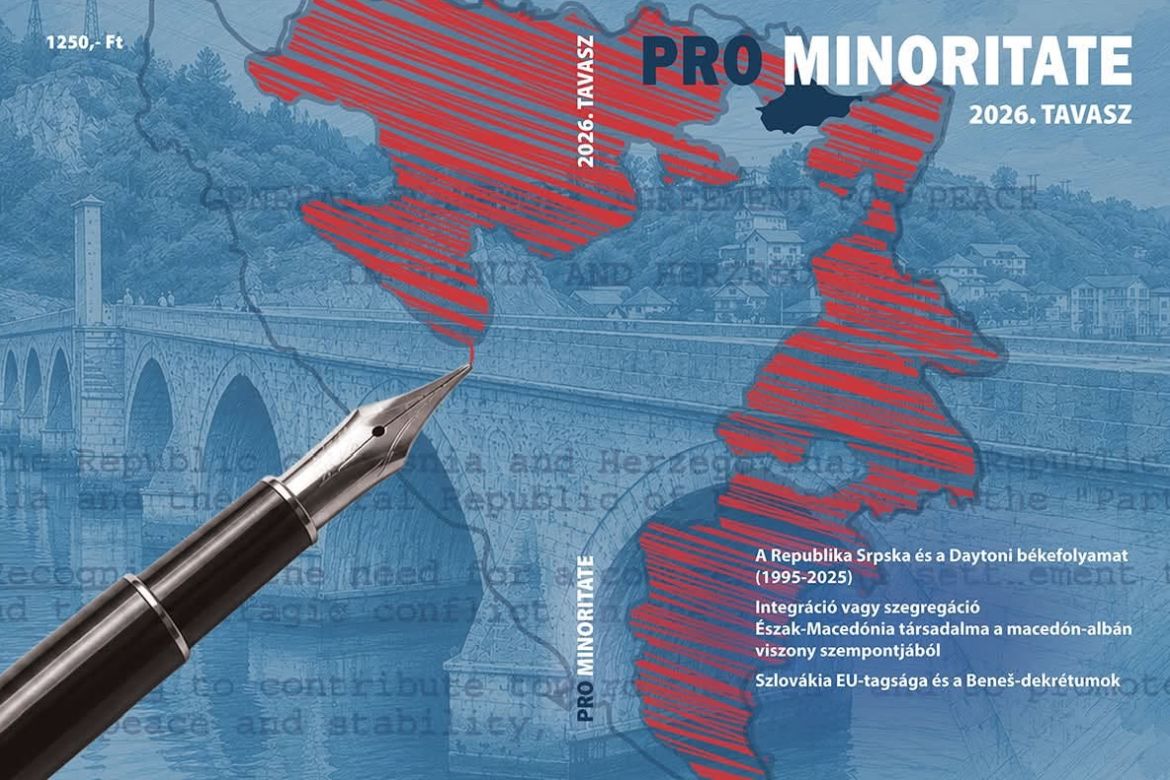
László Márkusz, a researcher on our project, published a study titled “Republika Srpska and the Dayton Peace Process (1995–2025)” in the Spring 2026 issue of Pro Minoritate (pp. 57–77), which was released in mid-summer.
The topic is significant for our project because Bosnia and Herzegovina served as one of the testing grounds for post-Cold War, liberal-inspired international state-building efforts. The experiences gained there were subsequently widely applied in Kosovo, Afghanistan, and Iraq—with varying degrees of success—during the first decade of the 21st century. The article demonstrates that reviewing and summarizing the lessons of state-building in Bosnia remains a relevant task for diplomats and historians today.
Drawing in part on personal diplomatic experience, the study provides an overview of the thirty-year history of the implementation of the Dayton Peace Accords, a process driven by the Office of the High Representative. The paper details the phases of the state-building process, focusing on their impact on the Bosnian entity known as Republika Srpska. The author aims to explain why Republika Srpska became the most problematic actor throughout the Dayton peace process.
The paper addresses the following questions, hitherto unexplored in Hungarian academic literature: How did the political conflict between the OHR and the leadership in Banja Luka escalate by 2025? How were these tensions influenced by the exercise of the “Bonn powers,” the activities of the Constitutional Court of Bosnia and Herzegovina, and the fierce dispute over state-owned immovable property? What role did Kosovo’s independence process and Russian diplomacy play in the Bosnian peace process? Finally, in light of current economic and political realities, can independence or unification with Serbia truly be considered viable options for the Serb-majority entity of Bosnia and Herzegovina?