
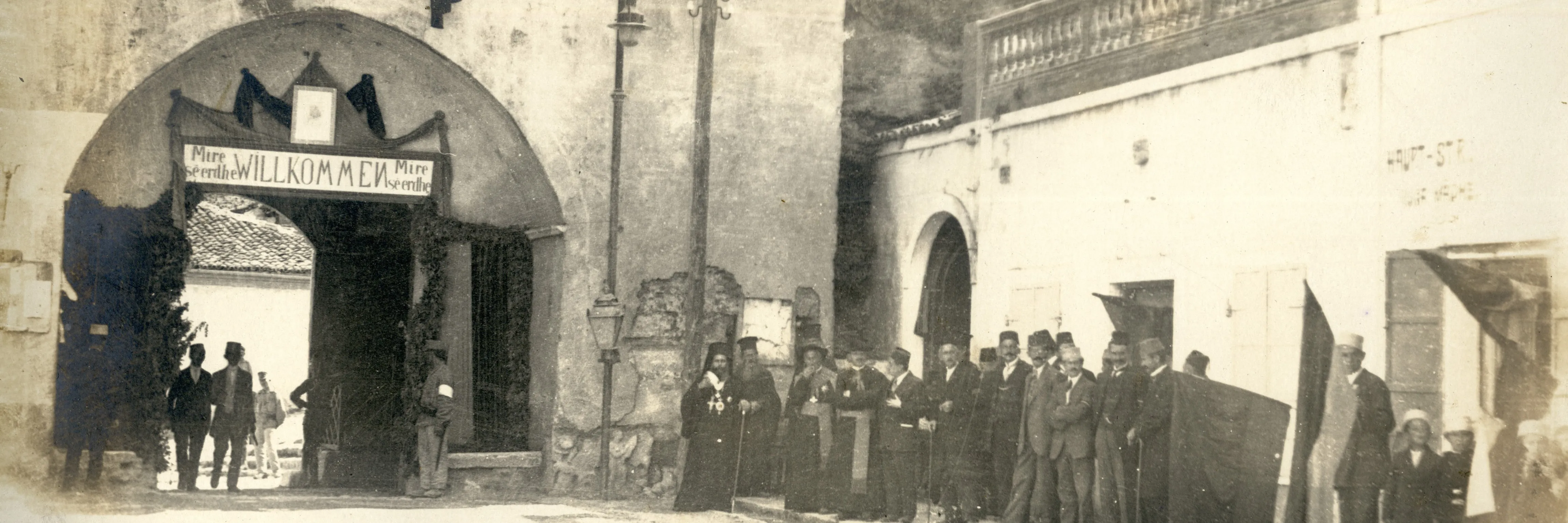
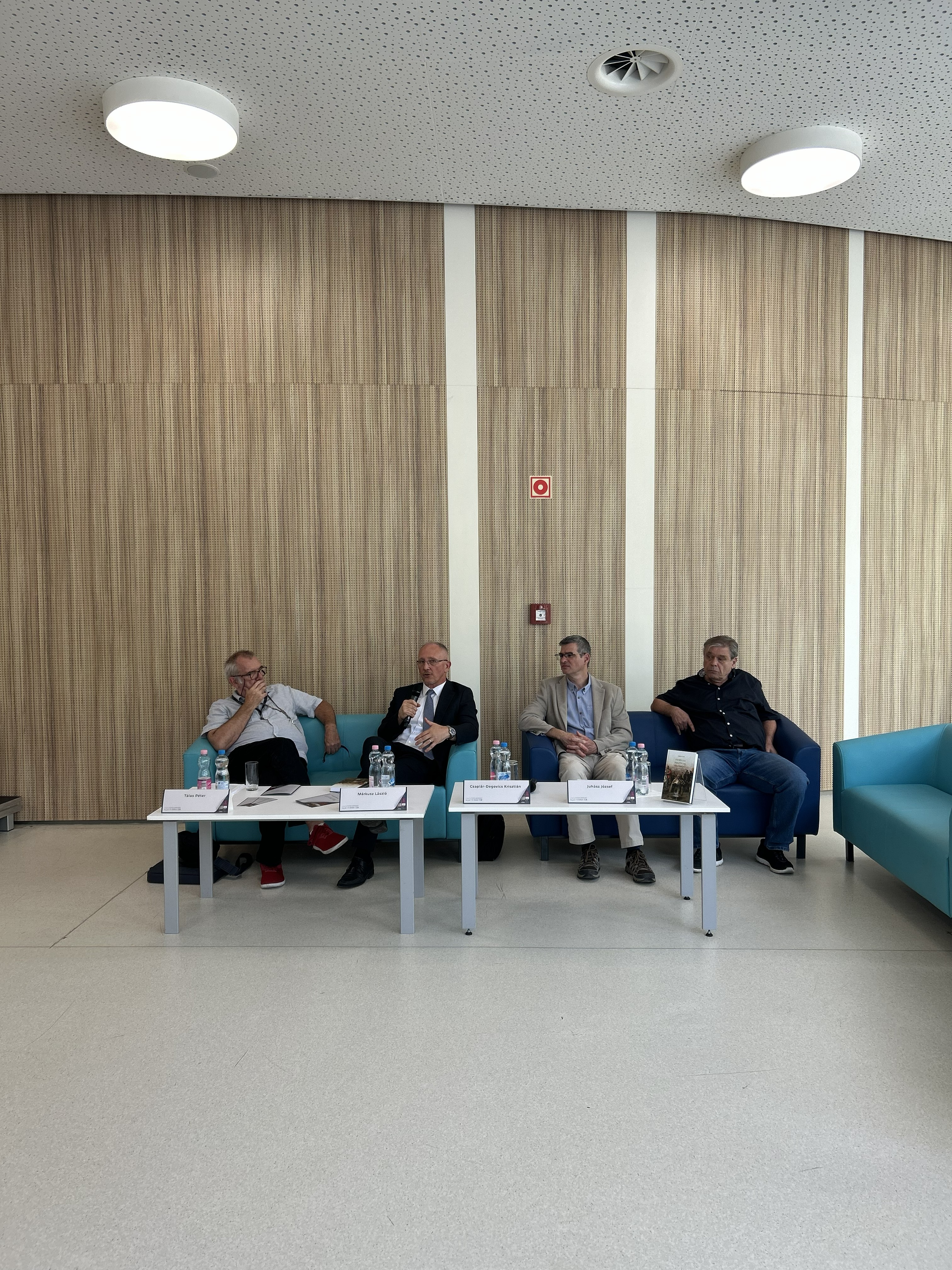
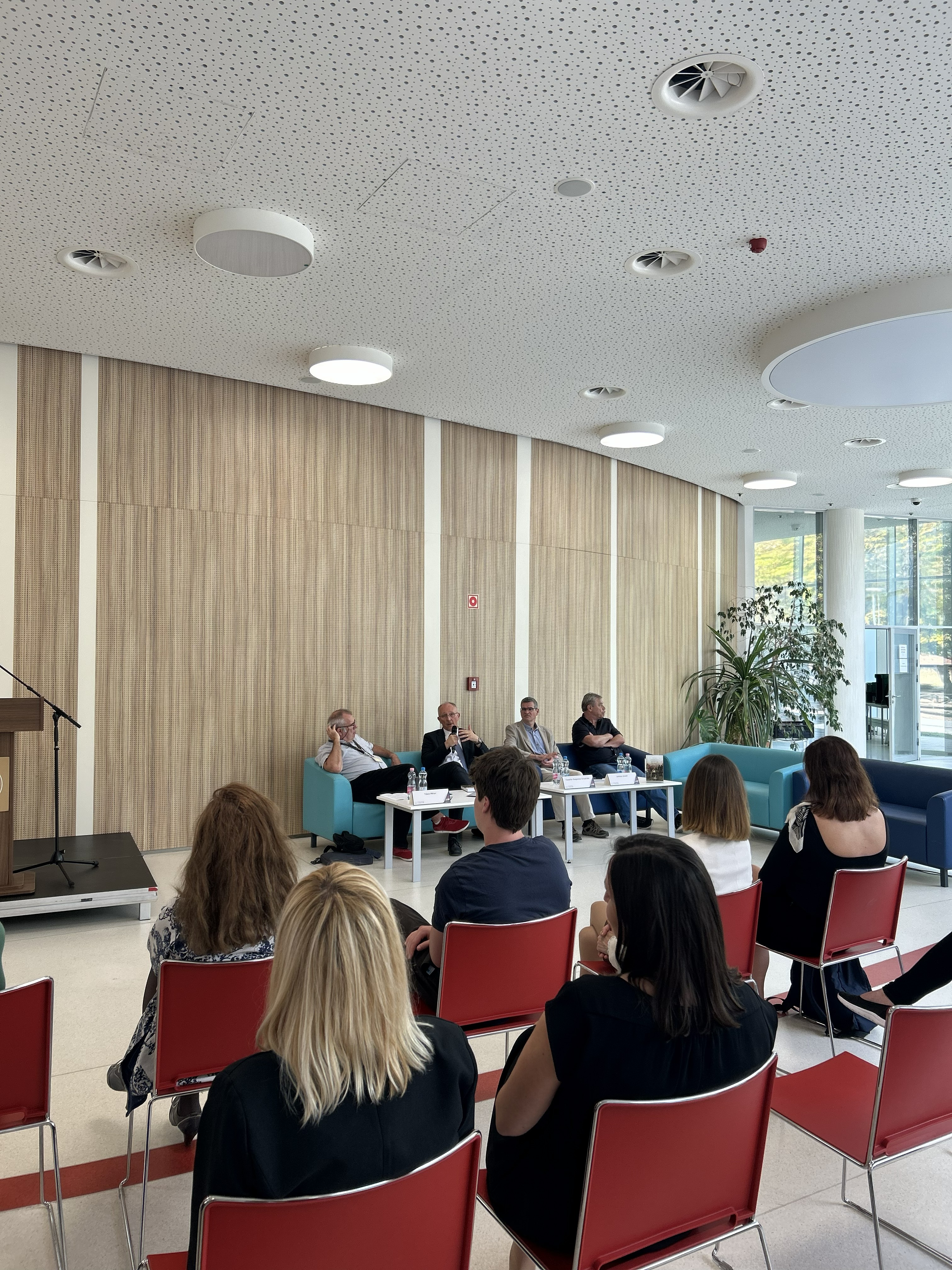
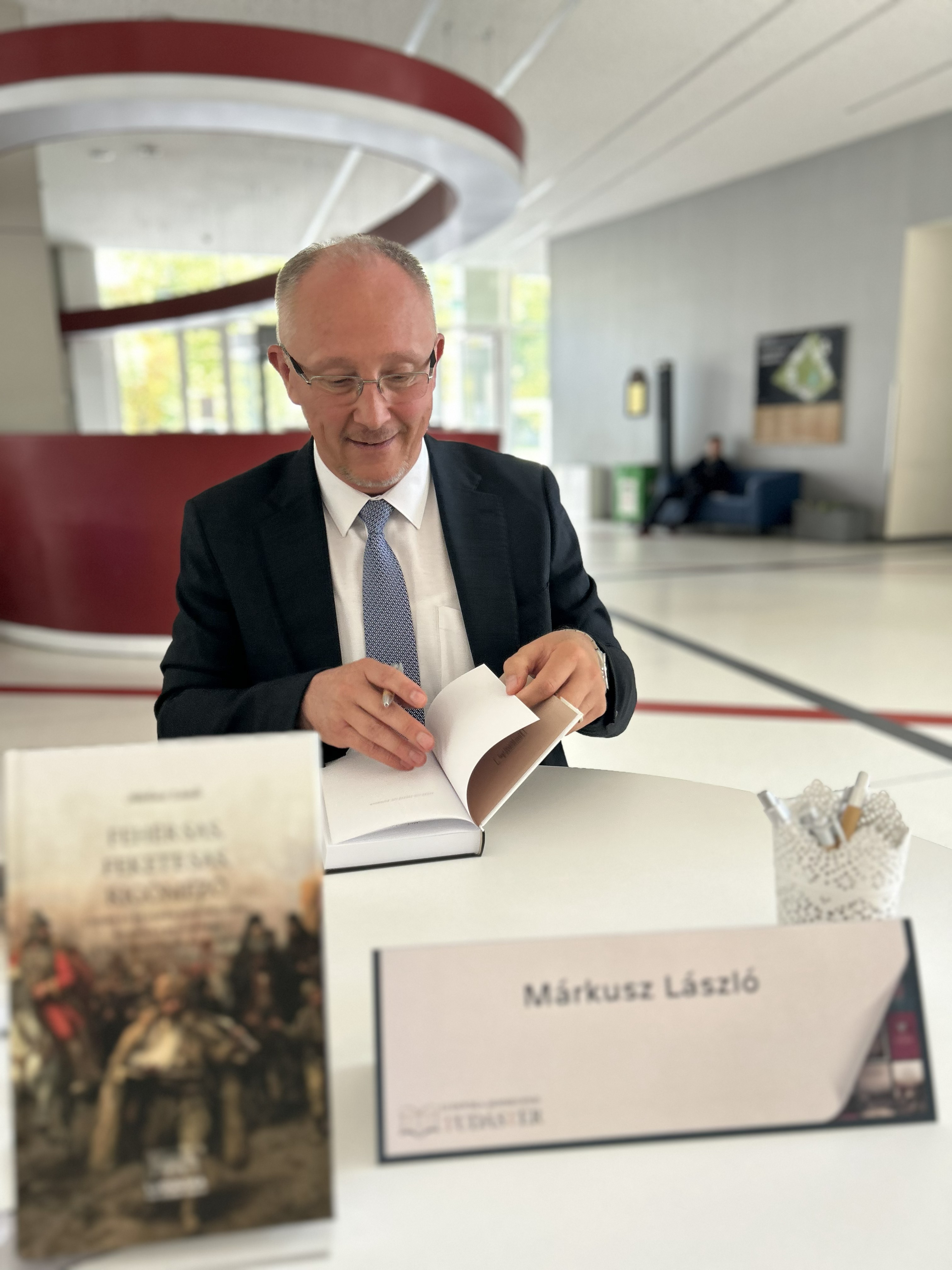
On September 12, 2026, a book launch for László Márkusz’s new book was held in the auditorium of the main academic building at the Ludovika University of Public Service. The monograph examines Serbian and Albanian national myths and political practices related to Kosovo from the perspective of theories of state-building, nation-building, and nationalism. The author presented the book, followed by a discussion featuring Péter Tálas, József Juhász, and Krisztián Csaplár-Degovics.
By combining sources and methods from history, sociology, political science, and diplomacy, the author explores the topic in a novel way. Breaking from traditional historical periodization and interpretive categories, Márkusz proposes new perspectives and conducts his analyses around a new periodization. His book explores the various stages of Serbian and Albanian nationalism—such as independence and autonomy, expansion and nation-building, assimilation, and irredentism. He identifies four theatres of the struggle for control over Kosovo: armed conflicts, demography, memory policy, and diplomacy.
He demonstrates a critical approach to the '”tenets” of Serbian and Albanian historiography about Kosovo; he analyzes the symbolic arenas of the cultural struggle between the two nations. He reflects – from a Central European perspective – on the transatlantic policies toward Kosovo. Beyond its scholarly findings, László Márkusz’s book also enriches our understanding of Hungarian international relations by explaining how a militarily weaker party could emerge victorious in one of the ethnic conflicts of the post-Cold War era. Some of the research necessary for writing the book was conducted as part of this project.
Open access: https://openaccess.ludovika.hu/nke/catalog/view/454/5932/13861